
Rural Health Transformation
A Commitment to Strengthen Rural Health Care
The Rural Health Transformation program is supported by the Centers for Medicare & Medicaid Services (CMS) of the U.S. Department of Health and Human Services (HHS) as part of a financial assistance award totaling $193,418,216 with 100 percentage funded by CMS/HHS. The contents are those of the author(s) and do not necessarily represent the official views of, nor an endorsement, by CMS/HHS, or the U.S. Government.
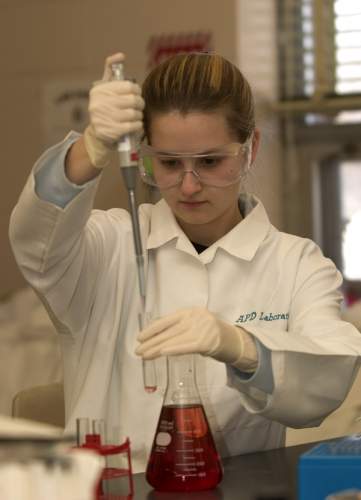
ICCB is collaborating with the Illinois Department of Healthcare and Family Services on the federal Rural Transformation Grant. Illinois received $193 million for FY26, and ICCB will receive $18 million each year over 5 years, totaling $90 million. Funds will be awarded for two separate rural health transformation initiatives. ICCB will receive $10 million for healthcare workforce expansion and will focus on expanding the following programs: Dental Hygienist, Physical Therapy Assistant, Respiratory Care Therapy/Therapist, Registered Nurse/Nursing, Nurse Midwife, and Perioperative/Operating Room and Surgical Nurse/Nursing. Additionally, the agency will receive $8 million for training healthcare support workers. Participating colleges will be able to choose from a menu of eligible programs, with the following programs identified as a priority: Medical/Clinical Assistant, Emergency Care Attendant (EMT), Emergency Medical Technology/Technician (EMT Paramedic), Lactation Consultant, Phlebotomy Technician/Phlebotomist, Nursing Assistant/Aide and Patient Care Assistant/Aide, and Substance Abuse/Addiction Counseling. Both initiatives prioritize maternal care and substance abuse and are designed specifically to meet rural workforce needs.
The purpose of the program is twofold: to attract and retain clinical health professionals in rural communities, and to expand access to critical healthcare providers in rural areas. “Rural” classification is defined by the Health Resources and Services Administration using the following criteria: non-metropolitan counties; outlying metropolitan counties with no population from an urban area of 50,000 or more people; census tracts with Rural-Urban Commuting Area (RUCA) codes 4-10 in metropolitan counties; census tracts of at least 400 square miles in areas with a population density of 35 or fewer per square mile with RUCA codes 2-3 in metropolitan counties; census tracts with Research Report Series (RRS) 5 and RUCA codes 2-3 that are at least 20 square miles in area in metropolitan counties. The following colleges meet the definition of “rural” and are eligible to receive funds:
- Black Hawk College
- Carl Sandburg College
- College of Lake County
- Danville Area Community College
- Elgin Community College
- Heartland Community College
- Highland Community College
- Illinois Central College
- Illinois Eastern Community college
- Illinois Valley Community College
- John A. Logan College
- John Wood Community College
- Joliet Community College
- Kankakee Community College
- Kaskaskia College
- Kishwaukee College
- Lake Land College
- Lewis & Clark Community College
- Lincoln Land Community College
- McHenry County College
- Parkland College
- Prairie State College
- Rend Lake College
- Richland Community College
- Rock Valley College
- Sauk Valley Community College
- Shawnee Community College
- Southeastern Illinois Community College
- Southwestern Illinois Community College
- Spoon River College
- Waubonsee College
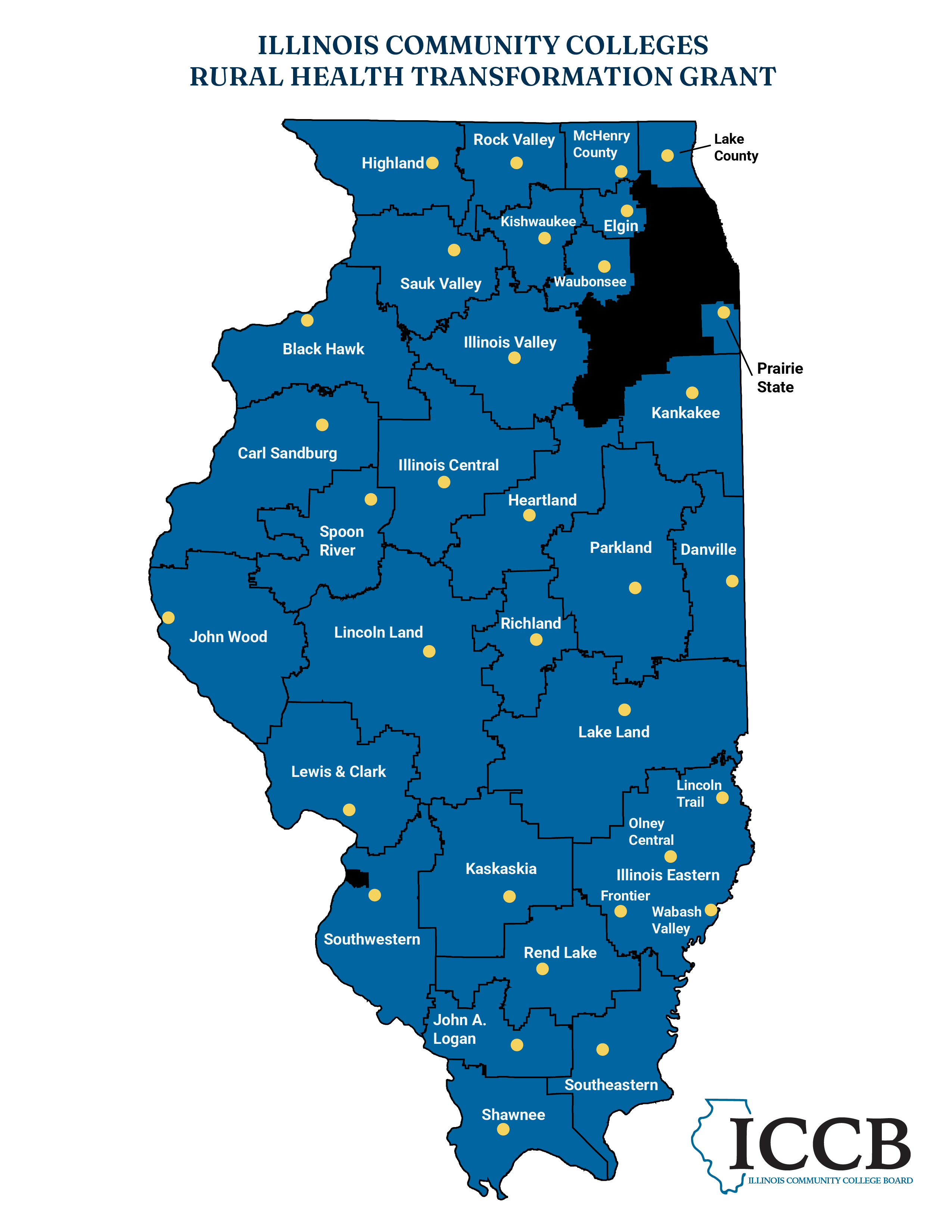
This initiative is designed as a statewide investment program administered through multiple subrecipients, rather than a single university-administered effort. ICCB will serve as one of the program administrators and fiscal agents. The grant will be strategically broad and cover most healthcare programs (including dental); although, Illinois will be prioritizing maternal health, behavioral health, EMT, and areas with short-term certifications. Other workforce development activities may include creating new programs, creating apprenticeship programs, expanding capacity in current programming, and increasing recruitment efforts. Additionally, the initiative offers incentives, including educational awards and relocation and retention bonuses, to students who agree to stay and work in a rural community.